
Here’s an interesting astronomical tidbit that people who don’t follow astronomy probably are unaware of.
If you look into the night sky in the spring between March and June, the sky will seem dull and relatively few stars will be visible. Contrast this to looking at the same sky in the fall and early winter where you will view all sorts of bright stars and, if you’re in a dark site, you might even see the arc of the Milky Way and the faint glow of nebulae and star clusters. This is a result of the Earth’s rotation around the sun.
If you remember your basic astronomy, the sun is located in the Milky Way galaxy and is positioned about three quarters of the way from the galactic core (the center of the galaxy). The sun is rotating around the center of the galaxy but since it takes around 250 million Earth years to complete a single orbit, none of us will be around to celebrate. The speed of the sun around our galaxy is around 514,000 miles an hour, so while you are sitting reading this post, you’re actually traveling at 514,000 miles an hour. Kind of scary when you think about it.
While the sun is performing its orbit, the Earth is also performing an orbit. The Earth orbit is around the sun and it takes around 365 days, which we define as a year. This we can celebrate and we do so every year on Dec 31 / Jan 1. For some of us the celebration takes place with thousands of people in Times Square or Sydney Australia, for others it’s sitting a home watching the annual Three Stooges marathon. But enough about my life, back to the explanation.
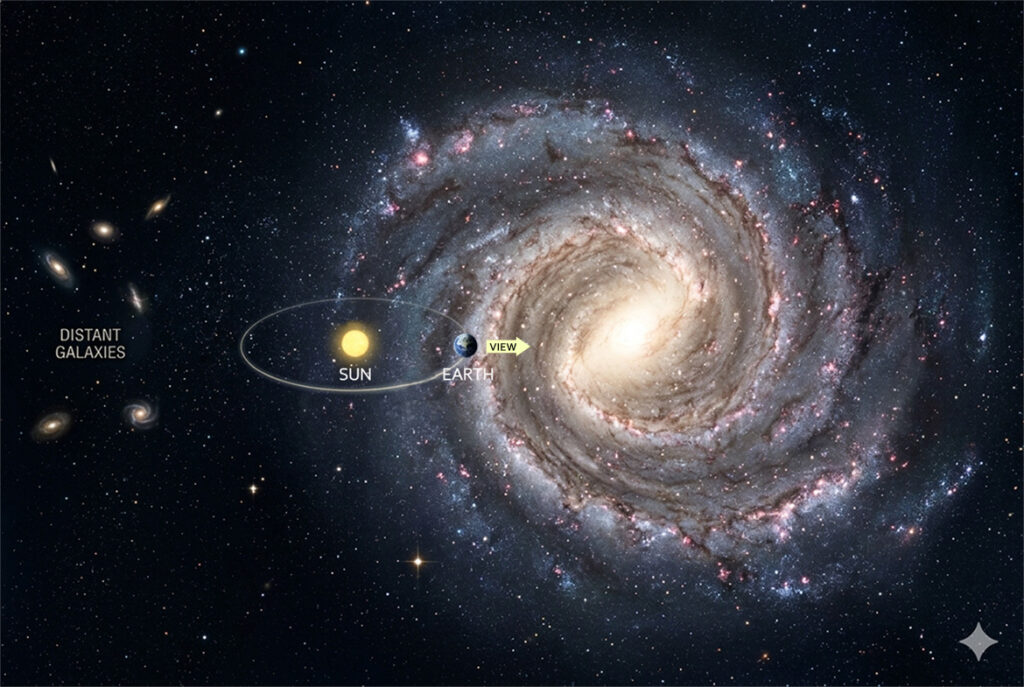
The orbit of the Earth around the Sun determines what we see at night. In the spring, the sun is positioned between the Earth and our view of the galactic core so our night sky is the view outward where there’s relatively little in the way of stars and matter and what we see is other galaxies way in the distance.
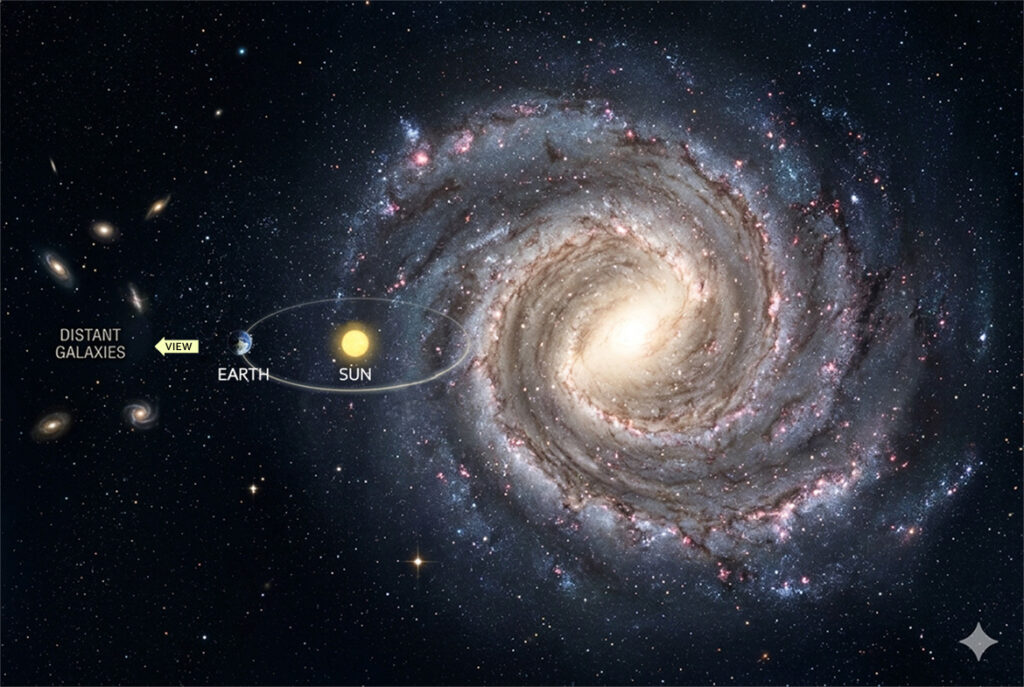
In the fall and winter, our rotation around the sun puts us on the side facing the core, so our night sky is filled with the stars, dust and glowing matter that make up our galaxy.
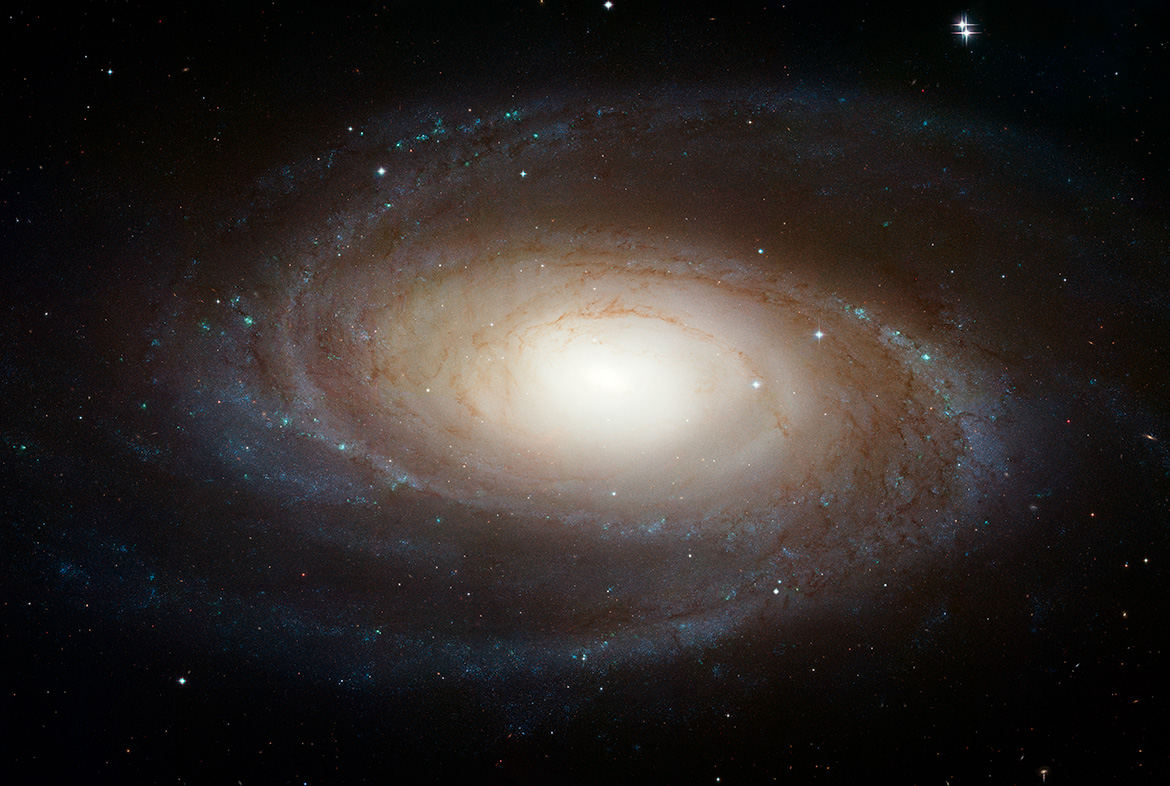
The image at the top of the post is of Messier 81 also known as Bode’s Galaxy and was taken from the Hubble Telescope. Here’s the attribution:
By NASA, ESA and the Hubble Heritage Team (STScI/AURA) – http://www.spacetelescope.org/images/heic0710a/ (very high quality ([cdn.spacetelescope.org/archives/images/screen//heic0710a.jpg JPEG file] 346 MB)http://hubblesite.org/newscenter/archive/releases/2007/19/image/a/ (direct link), Public Domain, https://commons.wikimedia.org/w/index.php?curid=2173424
